







Heat assisted magnetic recording, holographic storage, and other promising approaches to optical storage
Overview
The shift towards a knowledge-based economy is resulting in an ever increasing quantity of information that must be stored, and conventional hard disk technology is under increasing strain to meet the demand for increased storage capacity. That continued demand for higher capacity and faster information storage media has triggered worldwide research activity into new design concepts to realize ultrahigh density storage devices.
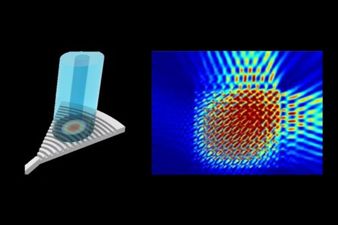
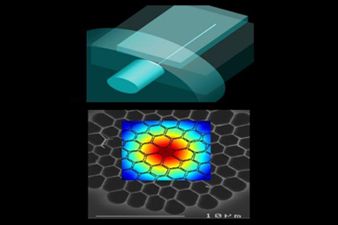
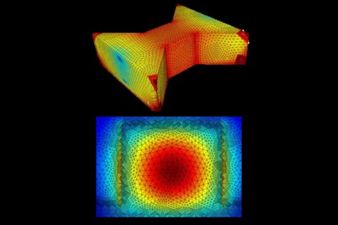
In turn, those design concepts employ optical storage media like holographic media, optical read/write capabilities including delivering of optical signals via state-of-the-art optical pick-up designs, utilizing optical signals to achieve heat-assisted magnetic recording, or developing optical characterization and processing methods to identify and repair defects, conduct failure analysis, or fabricate and characterize optical media. These optical design, analysis, fabrication and characterization steps require sophisticated and flexible optical simulation tools to understand the role of imperfections and design variables on data storage media and system performance.
|
|

"FDTD Solutions is an excellent tool for the design and simulation of near field optics and surface plasmons. My team has used it in our research work for more than 5 years. Its flexible modeling design, friendly input and output interfaces and fast simulation has benefited our research progress very much. "
- Dr. Baoxi Xu, Senior Scientist, Data Storage Institute, Agency for Science, Technology and Research (A-STAR), Singapore
|
Featured Publications Showcasing Lumerical's Products
| R. Yang, M. A. Abushagur, and Z. Lu, "Efficiently squeezing near infrared light into a 21nm-by-24nm nanospot," Opt. Express 16, 20142-20148 (2008) http://www.opticsinfobase.org/abstract.cfm?URI=oe-16-24-20142 |
| Y. Fu, W. Zhou and L.E.N. Lim, "Propagation properties of plasmonic micro-zone plates with and without fractals," Applied Physics B: Lasers and Optics 90, 421-425 (2008), DOI: 10.1007/s00340-007-2905-2 http://www.springerlink.com/content/7l308l3522192nx3/fulltext.pdf |
| E. Verhagen, A. Polman, and L. (K. ) Kuipers, "Nanofocusing in laterally tapered plasmonic waveguides," Opt. Express 16, 45-57 (2008) http://www.opticsinfobase.org/abstract.cfm?URI=oe-16-1-45 |
| Jun Wang and Wei Zhou, "An Annular Plasmonic Lens Under Illumination of Circularly Polarized Light," Plasmonics 4, 231-235 (2009) |
| Qin Chen and David R. S. Cumming, "Visible light focusing demonstrated by plasmonic lenses based on nano-slits in an aluminum film," Opt. Express 18, 14788-14793 (2010) |
| Lanying Yang, Qin Feng, Binghao Ng, Xiangang Luo, and Minghui Hong, "Hybrid Moth-Eye Structures for Enhanced Broadband Antireflection Characteristics," Appl. Phys. Express 3 (2010) 102602 |
| Ter-Hoe Loh, Qian Wang, Jie Zhu, Keh-Ting Ng, Yi-Cheng Lai, Yingyan Huang, and Seng-Tiong Ho , "Ultra-compact multilayer Si/SiO< sub> 2</sub> GRIN lens mode-size converter for coupling single-mode fiber to Si-wire waveguide,"Optics Express, 18 (21), 21519-21533 (2010) doi:10.1364/OE.18.021519. |
|
|